The Story Told from the Doorway
Learn how to write a story from the doorway by giving the narrator clear access, a personal stake, and purposeful uncertainty readers can interpret.
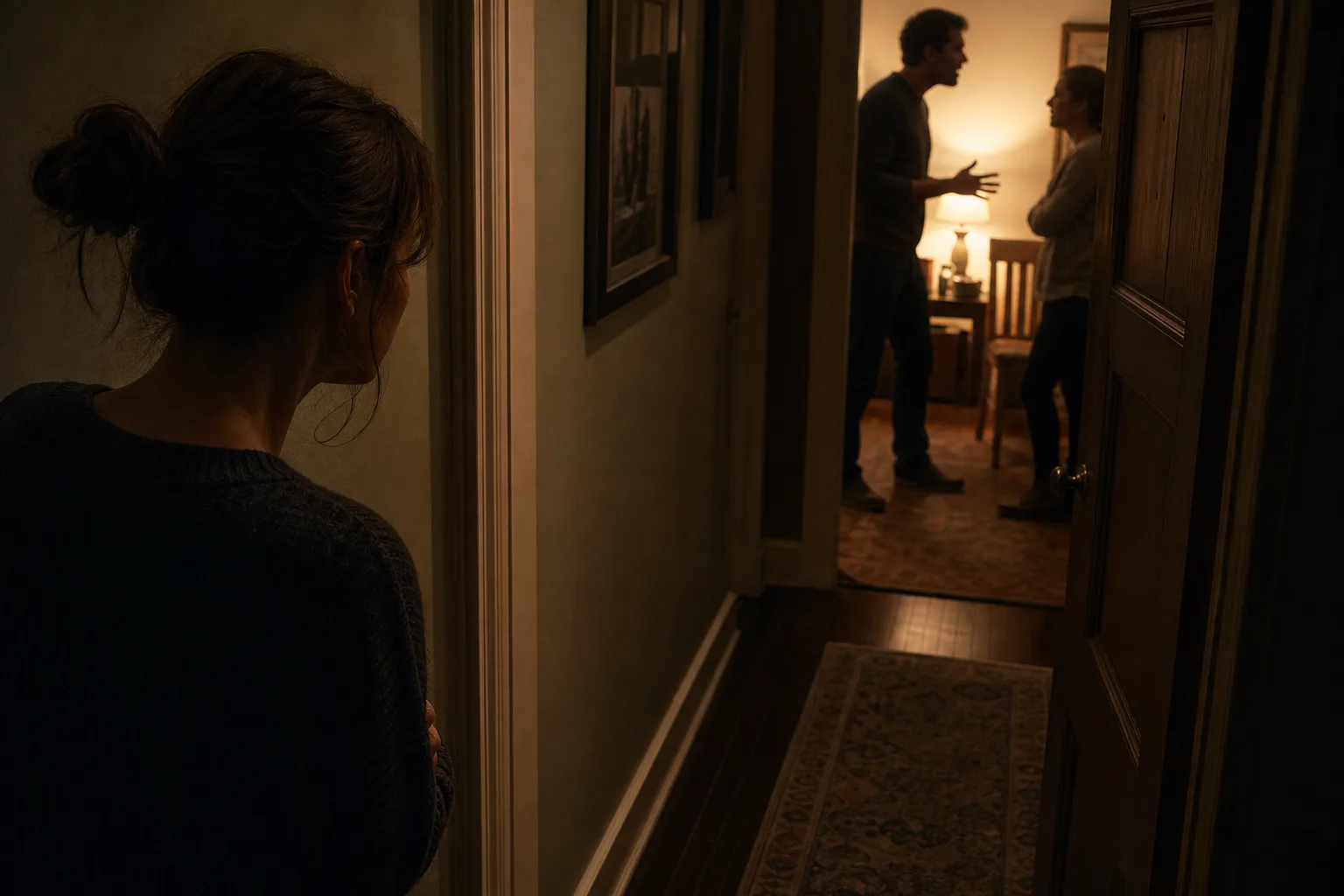
A narrator waiting in a hallway can make a family argument feel more revealing than a scene narrated from the middle of the room. In a story told from the doorway, the narrator hears a chair scrape and a name spoken sharply, but cannot see who moved or what expression followed; readers weigh those details alongside the narrator’s reasons for listening.
This story is more than a camera angle. The narrator’s position shapes what they can observe, what they can reasonably infer, and what they may choose to conceal. A clear boundary around their knowledge gives uncertainty texture instead of making the scene confusing.
Distance gives readers evidence to interpret
At the edge of an event, readers watch both the action and the narrator’s choices about how to describe it. A pause before naming someone, an unusually precise detail, or a sudden change of subject can reveal the narrator’s pressure without spelling it out.
Those signals work when the scene itself remains easy to picture. Readers can wonder why the narrator stayed in the hall while still knowing where the argument took place and what the narrator heard. Uncertainty about meaning is compelling; uncertainty about basic events can leave readers with nothing solid to interpret.
Give the narrator a believable reason to be there and a plausible route to every piece of information they report. If the scene requires knowledge they could not have gained, the voice may feel like an authorial disguise rather than a person at the edge.
Choose the narrator’s relationship to the event
A doorway narrator can be an involved witness, a limited observer, or a retrospective outsider. These positions can overlap, but choosing a dominant one helps keep access to information and emotional distance consistent.
An involved witness has something at stake
An involved witness is connected to the event, even if they are not leading it. A sibling waits outside a bedroom while a family argument unfolds; a junior employee stands in the corridor as a meeting breaks apart. Their personal stake gives ordinary details an emotional charge.
This position suits stories about loyalty, shame, fear, and the cost of staying silent. The witness may misread a gesture, protect someone, or mistake their own feelings for another person’s motives. Give readers clues about that bias rather than asking them to take every interpretation as fact.
A limited observer has little access
A limited observer is present but cannot see into the people or decisions at the center of the scene. A neighbor hears a cabinet close through an apartment wall; a visitor sees two people leave a courthouse separately but does not know what was decided. This narrator can report surfaces, sounds, and changes in behavior, not private explanations.
Limited access suits mysteries, social tensions, and stories shaped by rumor. Its risk is thinness: if the narrator has no particular reason to watch or retell the event, the account can feel like clues without a living voice. Give the observer a concern—a familiar sound that has stopped, an unfinished errand, or someone they are waiting for—to shape what they notice.
A retrospective outsider can compare then and now
A retrospective outsider tells the scene from a later point, after leaving the place or relationship behind. The narrator may remember standing in the doorway but now understand that the event mattered for reasons they could not see at the time.
This position suits stories about memory, regret, and family history. The narrator can distinguish what they knew then from what they believe now. Avoid tidy hindsight that turns an earlier self into a fool or pretends time has explained every motive.
Separate what the narrator sees from what they conclude
A convincing doorway voice distinguishes observation from interpretation. The narrator can see a coat left on a chair, infer that someone left in a hurry, and admit that they do not know why. That distinction lets readers consider the evidence for themselves.
During revision, mark each sentence with the kind of knowledge it contains, then decide what to do if its basis is unclear:
- Direct observation: Check whether the narrator could see, hear, smell, or physically feel the detail from their position. If yes, keep it as observation; if not, remove it or identify a credible source.
- Inference: Check whether a conclusion follows from details the narrator actually noticed. If the evidence supports it, signal how certain the narrator feels; if it does not, revise the conclusion or leave it unresolved.
- Reported information: Check who told the narrator and when. If a source exists, make that route legible; if not, remove the claim or recast it as a guess.
- Withholding: Check which name, fact, or explanation the narrator avoids. If the omission reflects fear, loyalty, or uncertainty, let that motive emerge; if it has no purpose, state the information plainly.
- Private thoughts: Check whether a sentence enters another person’s mind. If the narrator has a credible basis for the claim, show it; otherwise, describe the person’s words or behavior instead.
- Physical position: Check whether doors, walls, noise, and sightlines allow the narrator to perceive the scene. If they do, retain the detail; if not, change the narrator’s position or the information reported.
These checks do not forbid interpretation. They help readers understand how the account is being made, even when the narrator is perceptive, evasive, or wrong.
Keep the event clear while its meaning stays uncertain
Use selective detail rather than constant vagueness. A narrator might describe a strip of light beneath a door but avoid deciding whether the voices inside sound angry. The sensory detail grounds the moment; the withheld judgment leaves room for doubt.
Withholding also needs a motive. A narrator may fear betraying a friend, dislike the person they describe, or lack the words to explain what they witnessed. The motive can emerge through repeated attention, corrections, and changes of subject rather than an explicit explanation.
Say you are writing a scene in which a tenant waits in a hallway while two neighbors argue behind a closed door. The tenant hears a glass set down and one neighbor say, “You knew,” but cannot see either person. If the tenant owes one neighbor a favor, they might dwell on the pause after the accusation and mention the earlier shouting only in passing; readers can notice the imbalance without being told who is right.
In this invented situation, the argument’s sounds and setting are concrete, but the tenant cannot establish what the accusation means. Their debt explains the slant in their account, while the limits of hearing explain what they cannot report.
Answers to common questions about doorway narrators?
When should I use an involved witness?
Use an involved witness when their relationship to the event affects what they notice or say. This position suits a story where readers should feel the pressure of loyalty, complicity, or self-protection alongside the action.
Can a limited observer carry a whole story?
Yes, if the observer has a reason to watch and a distinct way of sorting the evidence. Curiosity, worry, routine, or prejudice can shape the account even when the narrator knows little about the people at its center.
What makes a retrospective narrator credible?
Let the older narrator separate what they knew at the time from what they believe now. Credibility comes from acknowledging the limits of memory and interpretation, not from explaining every detail with hindsight.
How do I keep a doorway perspective from feeling distant?
Give the narrator a bodily presence and a personal stake: cold hands on a railing, an unfinished errand, or a reason they cannot simply walk away. Physical detail and emotional consequence make distance feel imposed or chosen rather than empty.
Choose the distance that creates the right uncertainty
Start with the question you want readers to carry through the scene. If they should wonder whether the narrator is protecting someone, use an involved witness; if they should weigh signs without knowing private motives, use a limited observer; if they should feel memory revise an old moment, use a retrospective outsider.
Then check the voice against the scene’s boundaries. Ask what the narrator can know, what they have reason to notice, and what they would rather leave unsaid. If those answers conflict in a purposeful way, the tension can define the voice; if they contradict without purpose, adjust the viewpoint or the scene.
A story told from the doorway does not have to keep its narrator outside forever. The narrator may enter, retreat, or realize the threshold was never neutral. Each shift should change what the voice can claim, so readers feel the cost of looking in without being asked to believe the narrator sees everything.
It is not worth making every object mysterious or every paragraph coy. A plain account of a cup, a coat, or a long wait can give the withheld moment room to matter. The doorway works best as a specific position from which one person can tell the story honestly, incompletely, and with consequence.
Another story nearby

The Character Who Wants Two Opposite Things
Use a character-with-opposing-desires prompt to build a concrete choice, reveal what matters to your protagonist, and…
A Room That Keeps Its Own Secrets
Learn how a fictional room reveals history and tension through objects, physical traces, and omissions, so…