What Changes When the Plan Fails?
A failed plan in a story should create a fresh choice, not just a delay. See how one disrupted escape reshapes the plot and its stakes.
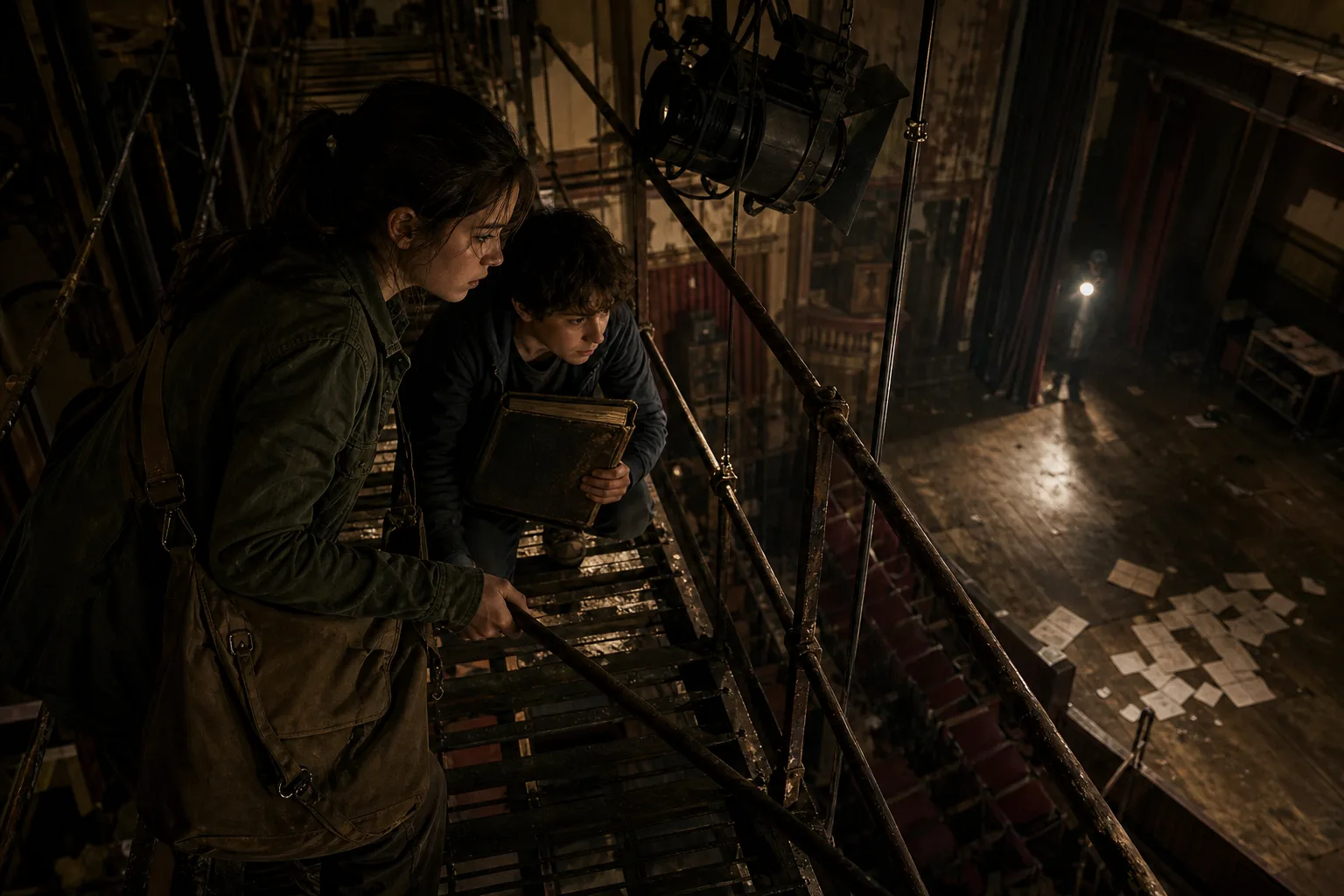
A failed plan in a story earns its turning point when it forces the characters to choose a different way forward. If the only result is lost time, the plot has stalled; if the failure changes what the characters can do, trust, or risk, the story has begun a new phase.
Consider an invented situation: Mara and her younger brother Eli are trying to get a ledger out of a shuttered theater before a demolition crew arrives at dawn. The ledger can expose the theater owner’s fraud, but carrying it through the main entrance would reveal who took it. Mara’s plan is to leave through a disused loading tunnel that opens onto the alley.
The plan gives the characters a clear route
A plan makes a scene legible. The reader can understand what the characters intend, what they need, and which obstacle might stop them. Here, Mara has a destination, a valuable object to protect, and a route that seems less dangerous than the front doors.
The plan also establishes the story’s working assumptions. Mara believes the tunnel is open, that Eli can keep pace, and that getting the ledger outside is the main problem. These assumptions matter because the turning point can challenge them one by one instead of introducing trouble at random.
Before the plan fails, give the reader enough practical detail to follow it. The siblings have a flashlight with a weak beam, a canvas satchel, and a key borrowed from a custodian. The tunnel runs beneath the stage and ends behind the theater’s old coal room. Those details are not decoration; they make the route feel possible and give later choices something to work with.
The failure closes one option and exposes another
Imagine Mara reaches the tunnel door and finds the passage flooded with water and fallen plaster. The ledger is already in the satchel, and footsteps sound near the front lobby. The original exit is unusable, so the siblings cannot simply wait for the obstruction to clear without risking discovery.
That disruption changes the plot only if it creates a consequential choice. Mara can take the ledger back toward the lobby and risk being seen, hide it in the theater and leave without it, or climb to the lighting catwalk and cross above the stage toward a fire stair. Each option carries a different cost.
The new route should grow from the situation rather than appear as a convenient escape hatch. The catwalk is accessible because Mara once helped Eli repair a jammed stage lamp; the fire stair is known to him because he has spent years exploring the building. A detail from their shared past now becomes a usable resource, while the unstable walkway makes that resource dangerous.
The turning point changes what the characters must decide
At first, Mara’s question is, “How do we get the ledger out?” After the tunnel fails, the more revealing question becomes, “Who should carry it, and what are we willing to risk to keep it?” Eli knows the catwalk better, but Mara is carrying the satchel and feels responsible for the evidence.
Say Mara hands Eli the ledger and asks him to cross first. He refuses because the catwalk is slick, then points out a safer route across the stage that will leave them exposed to anyone in the lobby. Mara must choose between protecting her brother from the climb and protecting the ledger from discovery. The decision can reveal character through action without pausing for a speech about courage or loyalty.
For the plot, the crucial change is not that the siblings are delayed. It is that their old division of labor no longer works. Mara cannot make every decision alone, and Eli cannot remain a passenger in her plan. The failed route alters who has agency in the scene.
The consequences should follow the choice
Suppose Mara chooses the exposed stage crossing. Eli carries the satchel while Mara steadies him on the narrow boards. A flashlight beam sweeps across the seats below, forcing them to freeze. They reach the fire stair, but the satchel catches on a broken railing and tears open. The ledger stays intact; several loose papers scatter onto the stage.
This result is useful because it connects the characters’ choice to the next complication. They escaped the tunnel, but now they must decide whether to retrieve every paper or leave some behind. The choice has also changed the evidence: a page might be missing, or a discoverable document could alert the theater owner to what they know.
Keep consequences proportionate to the story. The catwalk does not need to collapse, a new villain does not need to appear, and the ledger does not need to vanish merely to make the scene feel dramatic. One consequence that follows clearly from the decision can create more tension than a stack of unrelated emergencies.
A failed plan works best when the next choice is sharper
In this invented scene, the result is not simply “the siblings got out another way.” Mara has ceded control, Eli has taken responsibility, and the evidence is now harder to preserve. Their next decision can shape the following scene: leave with the intact ledger, search for the scattered pages, or split up and risk separating before dawn.
That is the useful test for a disrupted plan: after the failure, can the characters still pursue the same goal in the same way? If so, the event may be a delay. If the goal, method, alliance, or acceptable risk has changed, the event has become a turning point.
Questions writers ask about a failed plan?
How do I make a failed plan feel believable?
Plant the plan’s fragile assumptions before they break, such as an unreliable key or a route the characters have not checked. Then let the failure arise from the setting, the characters’ choices, or an established source of pressure rather than an arbitrary interruption.
Does a failed plan need to make things worse?
It needs to change the situation, but the change does not have to be purely negative. A blocked route might reveal a useful passage or make a reluctant character take charge, as long as that gain brings a new cost or responsibility.
How can I tell a turning point from a delay?
Compare the choices available before and after the disruption. If the characters can resume the original plan with no meaningful change, the event has probably delayed them; if they must accept a different risk, method, or relationship, the plot has turned.
Should the plan fail because of a character’s mistake?
It can, but a mistake is most revealing when it follows from what the character believes or values. A character who hides a crucial detail to protect a sibling creates a more personal consequence than one who simply forgets to bring a key.
Keep the disruption tied to the story’s central pressure
When shaping a failed plan, track the goal, the assumptions behind the route, the options that disappear, and the new choice the characters face. Then check that the consequence grows from their decision and points toward a different next scene. For a story about exposing a theater owner’s fraud, the turning point should complicate the evidence or the siblings’ willingness to act—not divert them into an unrelated chase.
It is not worth adding a string of extra obstacles just to keep the characters busy. A single blocked tunnel can carry the scene if it changes who leads, what the siblings risk, and what they must decide next. That is what makes a failed plan move the plot forward.
Another story nearby

The Character Who Wants Two Opposite Things
Use a character-with-opposing-desires prompt to build a concrete choice, reveal what matters to your protagonist, and…

A Room That Keeps Its Own Secrets
Learn how a fictional room reveals history and tension through objects, physical traces, and omissions, so…